
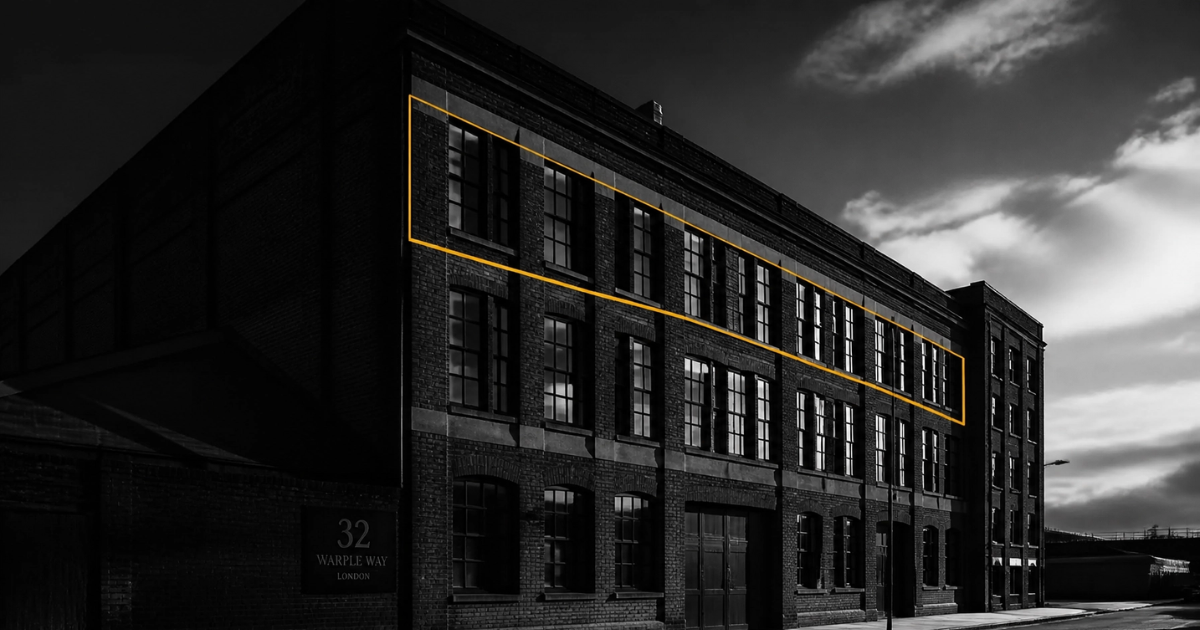
Commercial-to-Residential Conversion Finance: A Guide to Funding Property Development Projects
How to finance the purchase, planning and conversion of commercial buildings into residential properties in the UK.
Converting a commercial property into residential accommodation can create an opportunity to unlock value from buildings that no longer serve their original purpose. Empty offices, redundant retail units and underused commercial premises may have potential to become apartments, houses or rental properties.
But the opportunity is not simply about buying a building cheaply and turning it into flats.
A successful commercial-to-residential conversion depends on several factors working together: planning permission or permitted development rights, building condition, construction costs, achievable gross development value (GDV), suitable finance and a realistic exit strategy.
The funding requirements can also be more complicated than those of a standard buy-to-let purchase. A lender must understand what the property is worth today, what it is expected to be worth when the conversion is complete and whether the proposed development can realistically deliver that outcome.
At Auction360, we help property investors and developers explore specialist bridging and development finance options for property projects, including commercial-to-residential conversions.
This guide explains the main planning routes, how conversion finance works, what lenders look for and how to assess a project before committing your capital.
Key Takeaways
- Commercial-to-residential conversions can create value, but profitability depends on acquisition cost, planning, construction, finance and the completed property's achievable value.
- Class MA permitted development rights can allow certain commercial properties in England to change to residential use without a full planning application, but eligibility and prior approval requirements still apply.
- Full planning permission may be necessary where a building or proposed conversion falls outside permitted development rights.
- Bridging finance and development finance serve different purposes. A bridge may fund acquisition and certain refurbishment projects, while development finance is commonly used for larger schemes involving staged construction funding.
- Lenders assess more than the purchase price. They consider planning status, existing property condition, GDV, development costs, borrower experience and the proposed exit.
- A credible exit strategy is essential. The completed properties may be sold individually, sold as a block or retained and refinanced, depending on the project and available finance.
Contents
- What is a commercial-to-residential conversion?
- Why investors consider commercial conversions
- Understanding Class MA permitted development
- Class MA versus full planning permission
- How commercial-to-residential conversion finance works
- Bridging finance versus development finance
- How much can you borrow? Understanding LTC, LTV and GDV
- What lenders look for
- Assessing the profitability of a conversion project
- Common risks and challenges
- How to prepare for a conversion finance application
- Why work with Auction360?
- Frequently asked questions
What Is a Commercial-to-Residential Conversion?
A commercial-to-residential conversion involves changing a property's use from commercial or another non-residential category into residential accommodation.
Depending on the building and the proposed scheme, this could involve converting:
- An office building into apartments.
- A vacant retail unit into residential accommodation.
- A former bank or high-street branch into flats.
- A redundant commercial building into a block of rental apartments.
- A suitable light industrial or business premises into residential units.
- A mixed-use building into a combination of commercial and residential accommodation.
The scale of the project can vary considerably.
A relatively straightforward conversion might involve reorganising an existing office layout to create several self-contained flats. A more complex scheme could involve structural alterations, extensions, new access arrangements, additional floors or significant changes to the building's services.
The difference matters because the planning requirements, construction costs, professional team and finance structure can be very different.
For investors, the attraction is the potential to acquire an underused commercial asset and reposition it for a residential market where demand, values and rental prospects may be stronger.
However, not every commercial building is suitable for conversion. The property's location, layout, condition, planning status and conversion costs must all be assessed before its potential value can be established.
Why Investors Consider Commercial Conversions
The commercial-to-residential strategy is attractive because it offers the possibility of creating a different asset from the one originally purchased.
Rather than relying exclusively on general property market appreciation, developers may be able to create value through a change of use and physical improvement.
1. Potential to unlock underused property
Some commercial buildings have become less suitable for their original purpose.
Changes in working patterns, retail demand and local business activity can leave offices and shops underused or vacant.
Where residential use is appropriate and planning requirements can be satisfied, these properties may offer opportunities for redevelopment.
The investment case depends on the difference between the total project cost and the realistic value of the completed residential units.
2. Multiple residential units from one acquisition
An appropriately sized commercial building may have the potential to accommodate several independent homes.
For example, an office building could potentially be converted into six or eight apartments, subject to its dimensions, planning requirements, design and building regulations.
This creates the possibility of generating value from multiple residential units rather than relying on one property's rental income or resale price.
The number of units should never be assumed from the building's floor area alone. Layout efficiency, natural light, access, fire safety, space standards and other design requirements can affect the viable scheme.
3. Different potential exit strategies
A completed conversion can offer more than one possible exit.
Depending on the project, an investor might:
- Sell the individual apartments.
- Sell the completed building as a single investment.
- Refinance and retain the apartments as rental properties.
- Retain the building as a longer-term residential investment.
Each route has different financial implications.
Selling individual units may produce a different total realisation from selling the building as a block. Retaining the apartments requires a suitable refinance and a rental model that works after finance and operating costs.
4. Opportunity to add value through development
A commercial-to-residential conversion can involve several sources of value creation:
- Securing the building at an appropriate acquisition price.
- Obtaining the necessary planning position.
- Improving the physical condition and layout.
- Creating marketable residential units.
- Managing construction costs and the development programme.
However, a change of use does not automatically make a property more valuable. The completed scheme must be commercially viable after accounting for every relevant cost.
Understanding Class MA Permitted Development
One of the most important planning routes for certain commercial-to-residential projects in England is Class MA permitted development.
Class MA was introduced in 2021 and allows eligible buildings in the commercial, business and service use class (Class E) to change to residential use (Class C3), subject to the relevant limitations and conditions.
It can provide an alternative to a full planning application, but it is not automatic permission to convert any commercial building.
What changed in March 2024?
The Class MA rules were amended with effect from 5 March 2024.
Two important restrictions were removed:
- The previous 1,500-square-metre maximum floorspace limitation.
- The requirement for the building to have been vacant for at least three continuous months immediately before the application.
This widened the potential scope of Class MA conversions.
However, the requirement for the building to have been in an eligible use for a continuous period of at least two years before the prior approval application remains.
The building must also satisfy the applicable exclusions and conditions under the legislation.
These changes make Class MA relevant to a broader range of potential conversion projects, but investors should not interpret them as a blanket entitlement to change any commercial property into residential accommodation.
What types of commercial property may qualify?
Class E includes a range of commercial, business and service uses, such as:
- Shops.
- Restaurants and cafés.
- Offices.
- Financial and professional services.
- Indoor sports and fitness facilities.
- Medical and health services.
- Certain nurseries and day centres.
- Certain light industrial uses.
The property's actual lawful use and planning history matter.
A building described by an estate agent as an office, shop or industrial unit may not necessarily satisfy the Class MA requirements.
Before relying on this route, obtain planning advice and verify the building's use history and eligibility.
What is prior approval?
Even where a conversion falls within Class MA, the developer must apply to the local planning authority for a determination on prior approval before beginning the development.
The authority considers the specific matters set out in the legislation.
These can include:
- Transport impacts, particularly safe site access.
- Contamination risks.
- Flooding risks.
- Noise from nearby commercial premises.
- Natural light in habitable rooms.
- The effect on certain industrial and commercial areas.
- The impact of losing specified nursery or health-centre services.
- Certain fire-safety considerations.
Additional considerations may apply depending on the building's location and circumstances.
The local authority's assessment is therefore important. A building may appear suitable from a property-investment perspective but still encounter planning obstacles.
What happens if prior approval is refused?
If the local planning authority refuses prior approval, the proposed conversion cannot simply proceed under Class MA on the assumption that the permitted development right is available.
The investor may need to reconsider the design, address the issues raised, explore whether a revised application is possible or investigate a full planning application.
This can affect the development programme, finance costs and projected return.
Practical advice: Do not calculate your acquisition offer on the assumption that Class MA will be approved. Establish the planning position before exchanging contracts or bidding at auction wherever possible.
Class MA Versus Full Planning Permission
Not every commercial-to-residential conversion qualifies for Class MA.
Some projects require a full planning application, particularly where the existing building or proposed works fall outside the permitted development framework.
The appropriate route depends on the property, its lawful use, location, planning history and the extent of the proposed development.
| Consideration | Class MA permitted development | Full planning permission |
|---|---|---|
| Planning route | Change of use under permitted development rights | Formal planning application |
| Eligible properties | Buildings satisfying Class MA criteria | Schemes considered under the relevant planning framework |
| Prior approval | Required | Not the same process; full planning determination applies |
| Design flexibility | Subject to the permitted development limitations | Proposal assessed against relevant planning policies |
| External alterations | Restricted by the scope of the permitted development right | May be considered as part of the application |
| Local authority involvement | Prior approval on specified matters | Wider assessment of the planning proposal |
| Development certainty | Depends on eligibility and prior approval | Depends on the planning decision and conditions |
When might full planning permission be required?
A full planning application may be necessary where:
- The building does not meet Class MA eligibility requirements.
- The proposed change of use falls outside the permitted development right.
- The proposed development involves works that require separate planning permission.
- An applicable restriction removes the relevant permitted development right.
- The proposed scheme involves a wider redevelopment that cannot be delivered under Class MA alone.
Full planning permission may also be preferable where the developer wants to pursue a more ambitious scheme involving substantial external alterations or a different residential layout.
Article 4 Directions: An important consideration
An Article 4 Direction allows a local planning authority to withdraw specified permitted development rights in a defined area.
Where an applicable direction removes the relevant right, a developer may need to apply for full planning permission rather than rely on permitted development.
This does not necessarily mean the proposed conversion is prohibited. It means that the scheme must go through the relevant planning application process.
Before purchasing a commercial property, check:
- Whether an Article 4 Direction applies.
- Which permitted development rights it removes.
- Whether the property falls within the affected boundary.
- Whether any other planning restrictions apply.
The local authority's planning department and a qualified planning consultant can help establish the position.
Useful reference: GOV.UK guidance on when planning permission is required and Article 4 Directions.
How Commercial-to-Residential Conversion Finance Works
Commercial conversion projects often require a different funding structure from a straightforward residential purchase.
The investor may need money to acquire the building, complete planning work, carry out construction and then sell or refinance the completed properties.
The funding requirement can change as the project progresses.
There are generally two main forms of specialist short-term property finance to consider: bridging finance and development finance.
Stage 1: Acquisition bridging finance
An acquisition bridge may be used to purchase a commercial property before the conversion works begin.
This can be particularly relevant when:
- Buying at auction.
- Purchasing a vacant commercial building.
- Acquiring a property that is unsuitable for a conventional mortgage.
- Securing a site while planning matters are being progressed.
- Purchasing a property before a longer-term development facility is arranged.
A bridging lender will assess the property, the proposed borrowing, the borrower's circumstances and the intended repayment strategy.
The amount available depends on the lender's valuation and criteria. Do not assume that the lender will advance a fixed percentage of the purchase price.
An acquisition bridge may be suitable for the initial purchase, but the investor must have a realistic plan for funding the conversion itself.
Stage 2: Development or refurbishment finance
Once the project is sufficiently developed, a development finance facility may be used to fund the conversion works.
Depending on the lender and scheme, the facility may cover eligible construction costs through staged drawdowns.
The lender may appoint a monitoring surveyor to review the construction budget, programme and progress before funds are released.
The developer may need to contribute their own funds towards the project and provide evidence that sufficient resources are available to complete the works.
Stage 3: Completion and exit
When the conversion is finished, the developer must repay the development facility.
The intended exit might involve:
- Selling the completed residential units.
- Selling the building as a single investment.
- Refinancing onto a residential investment facility.
- Using a suitable development exit facility while completing sales.
The right exit depends on the project's objectives and the evidence available to support it.
A refinance should never be treated as guaranteed. The completed property's valuation, rental income, ownership structure and the refinance lender's criteria will all matter.
Bridging Finance Versus Development Finance
Choosing between bridging and development finance is one of the most important decisions when structuring a commercial conversion.
Although there can be overlap between specialist products, the two facilities are designed to address different funding requirements.
| Feature | Bridging finance | Development finance |
|---|---|---|
| Main purpose | Short-term acquisition or refurbishment funding | Funding a development or substantial conversion |
| Typical project | Acquisition, light or eligible heavy refurbishment | Larger or more complex construction projects |
| Interest structure | Often expressed as a monthly rate | Often expressed as an annual rate |
| Works funding | Depends on product and lender | Commonly released in stages |
| Monitoring | Depends on facility and works | Monitoring surveyor commonly involved |
| Repayment | Sale, refinance or another agreed exit | Sale of completed units or refinance |
| Underwriting | Property, borrower, loan and exit | Planning, cost plan, GDV, borrower, build and exit |
When might bridging finance be appropriate?
A bridging loan may be appropriate where the acquisition is the immediate priority and the project involves a relatively contained refurbishment or conversion.
For example, an investor might purchase a small commercial building requiring substantial internal improvements before it can be sold or refinanced.
The lender must be comfortable with the property's condition and the scope of the proposed works.
A standard bridging product may not be suitable for every change-of-use scheme, particularly where the project involves major structural alterations or complex construction.
When might development finance be more suitable?
Development finance is commonly used for projects involving:
- Significant structural changes.
- Multiple residential units.
- Extensive construction work.
- Extensions or additional floors.
- Complex building services.
- A longer development programme.
It can provide funding for eligible construction costs through staged drawdowns.
The lender will usually want a detailed development appraisal, cost plan, programme, planning documentation and evidence of the developer's ability to deliver the project.
Can you use both facilities?
Yes, a project may involve an acquisition bridge followed by development finance.
For example, an investor might use bridging finance to acquire a commercial building while planning matters are being resolved, then refinance onto a development facility once the scheme meets the next lender's requirements.
However, this is not an automatic or guaranteed transition.
The development lender must agree to the project, the valuation and the proposed loan structure. The investor must also account for the cost of redeeming the initial bridge, legal fees, valuation expenses and any other refinancing costs.
Before taking out acquisition finance, consider whether the intended development lender is likely to support the proposed scheme.
How Much Can You Borrow? Understanding LTC, LTV and GDV
Commercial conversion finance is not usually assessed using one lending percentage.
Lenders may consider several measurements, including loan-to-value, loan-to-cost and loan-to-GDV.
Understanding these terms helps investors evaluate how much equity a project may require.
Loan-to-value (LTV)
LTV compares the amount borrowed with the property's valuation.
For example:
- Property valuation: £500,000.
- Proposed loan: £300,000.
- LTV: 60%.
The calculation is:
LTV = Loan Amount ÷ Property Valuation × 100
The lender determines which valuation basis applies. It may consider the current market value, purchase price or another relevant figure.
Loan-to-cost (LTC)
LTC compares the loan with the eligible total project cost.
For example:
- Acquisition and eligible development costs: £800,000.
- Proposed loan: £560,000.
- LTC: 70%.
The exact cost base used by a lender may differ. Some lenders include certain professional fees and other project costs, while others apply their own definitions.
Always establish what the lender includes in its calculation.
Loan-to-GDV (LTGDV)
GDV is the estimated market value of the completed development.
LTGDV compares the loan with that completed value.
For example:
- Estimated completed value: £1,200,000.
- Proposed loan: £720,000.
- LTGDV: 60%.
A lender will not necessarily accept the developer's GDV estimate. It will usually rely on its own valuation and evidence from comparable properties.
Why the lowest lending limit matters
A lender may apply more than one maximum lending measure.
Even if the scheme appears to support a particular loan-to-cost figure, the loan-to-GDV limit may restrict the amount available.
Rolled-up interest, fees and other facility costs may also count towards the lender's exposure.
This is why a headline lending percentage should never be treated as a guaranteed borrowing amount.
Illustrative market context: Some specialist development finance providers publish senior lending parameters around 60–70% of eligible project cost and up to approximately 65% of GDV. These are examples of market guidance, not universal lending limits or an offer available to every applicant.
What Lenders Look for When Assessing a Commercial Conversion
A commercial-to-residential project involves several risks that a lender must understand before approving finance.
The lender is not simply assessing whether the building has potential. It is evaluating whether the proposed scheme can be completed and whether the loan can be repaid.
1. Planning status
The planning position can have a significant impact on the lender's assessment.
Lenders may distinguish between:
- A building with no confirmed residential planning route.
- A project being assessed for Class MA eligibility.
- A submitted prior approval application.
- Prior approval granted, subject to relevant conditions.
- Full planning permission granted.
- Planning permission with outstanding conditions or obligations.
A project with the relevant planning position confirmed may be easier to assess than one relying on an uncertain planning outcome.
However, even approved planning does not remove construction, valuation or exit risks.
2. Current property condition
Commercial buildings can conceal problems that materially affect conversion costs.
A lender may want information about:
- Structural condition.
- Roof and external walls.
- Existing mechanical and electrical systems.
- Drainage and water supply.
- Asbestos risks.
- Fire safety.
- Contamination.
- Flood risk.
- Existing leases or occupation arrangements.
A building survey, structural engineer's report or specialist investigation may be necessary depending on the property.
3. Development budget
The lender will want to understand the cost of completing the project.
A credible budget should include:
- Demolition and strip-out.
- Structural alterations.
- Internal construction.
- Kitchens and bathrooms.
- Mechanical and electrical works.
- Fire-safety improvements.
- Utility connections.
- Professional fees.
- Planning and building-control costs.
- Contractor costs.
- Contingency.
- Finance and holding costs.
A budget that excludes professional fees or underestimates the complexity of existing building services may create problems later.
4. Gross development value
The lender will assess whether the completed residential units can realistically achieve the proposed value.
Evidence may include:
- Recent comparable sales.
- Similar completed conversion schemes.
- Local estate agent assessments.
- Evidence of demand for the proposed unit sizes.
- Rental evidence where the intended exit is a refinance.
The valuation must reflect the actual scheme rather than an optimistic projection.
5. Borrower experience and financial position
Some lenders place significant emphasis on the developer's previous experience.
They may want to understand:
- Whether the borrower has completed similar projects.
- The experience of the contractor and professional team.
- The borrower's available cash.
- The source of the equity contribution.
- Existing property or development commitments.
- The ability to manage cost overruns.
First-time developers may still have options, but the lender may require a stronger professional team, more equity or additional controls.
6. Exit strategy
The lender needs to understand how the loan will be repaid.
For a conversion scheme, possible exits include:
- Individual unit sales.
- A block sale.
- Refinance onto a buy-to-let or commercial investment facility.
- A suitable development exit facility.
The proposed exit should be supported by realistic financial assumptions and evidence.
Assessing the Profitability of a Commercial-to-Residential Conversion
The potential margin is one of the main reasons investors consider commercial conversions.
However, an attractive difference between the purchase price and projected GDV can be misleading if the full project cost has not been calculated.
A proper appraisal should consider the entire development.
The main project costs
A conversion appraisal should include:
| Cost category | Examples |
|---|---|
| Acquisition | Purchase price, auction fees, legal costs and applicable taxes |
| Planning and professional fees | Architect, planning consultant, structural engineer and other consultants |
| Surveys and investigations | Building survey, asbestos survey, environmental reports and specialist assessments |
| Construction | Labour, materials, structural works, services and internal fit-out |
| Compliance | Building control, fire safety and other required approvals |
| Finance | Interest, arrangement fees, valuation and legal costs |
| Holding costs | Insurance, utilities, security, rates where applicable and other ongoing costs |
| Sales and exit | Estate agency, marketing, legal fees and relevant disposal costs |
| Contingency | Allowance for unexpected costs and changes |
Tax treatment depends on the property, transaction and circumstances. SDLT, VAT and other tax considerations should be reviewed with an appropriately qualified adviser before the acquisition.
An illustrative conversion appraisal
Consider an investor evaluating a small commercial building for conversion into six residential apartments.
The following figures are purely illustrative. They are not a valuation, lender offer or prediction of the return available from a real project.
| Project item | Illustrative amount |
|---|---|
| Commercial property acquisition | £350,000 |
| Acquisition and legal costs | £12,000 |
| Planning and professional fees | £25,000 |
| Surveys and investigations | £8,000 |
| Conversion and construction works | £240,000 |
| Utilities and compliance costs | £25,000 |
| Finance and holding costs | £40,000 |
| Sales and marketing costs | £20,000 |
| Contingency | £30,000 |
| Total project cost | £750,000 |
Assume the completed six apartments have an estimated combined sale value of £900,000.
The initial appraisal would be:
- Estimated GDV: £900,000.
- Total project cost: £750,000.
- Illustrative development surplus: £150,000.
The development surplus represents 20% of total project cost before any additional tax on profit or other costs not included in the appraisal.
It should not be confused with guaranteed profit or cash available to the developer.
What happens if the valuation is lower?
Now assume the completed apartments achieve a combined sale value of £840,000 rather than £900,000.
The project surplus falls to £90,000 before any additional costs or taxes.
A £60,000 reduction in GDV has removed 40% of the original £150,000 surplus.
This illustrates why investors should test their appraisals against less favourable outcomes.
What if construction costs increase?
If the construction budget increases by £40,000, the total project cost rises to £790,000.
At the original £900,000 GDV, the surplus falls to £110,000.
If the project also experiences a lower sales value, the margin can narrow further.
The important lesson is that a conversion must remain financially viable when reasonable changes in cost, timing and completed value are considered.
Common Risks and Challenges in Commercial-to-Residential Conversions
Commercial conversion projects can create opportunities, but they involve risks that investors should investigate before committing.
1. Planning eligibility and prior approval
A property may appear suitable for Class MA but fail to meet the eligibility requirements.
Its lawful use history, location, Article 4 restrictions and other planning limitations may affect the available route.
How to manage it: Obtain planning advice and verify the property's lawful use and planning history before committing to the purchase.
2. Space standards and layout restrictions
The proposed apartments must be designed to meet the applicable requirements.
The Nationally Described Space Standard is relevant to planning decisions where adopted or applied by the relevant planning authority, but it is not a universal standalone requirement for every permitted development conversion in every circumstance.
Class MA also has specific prior approval considerations, including adequate natural light in habitable rooms.
Other requirements may arise under building regulations and the relevant fire-safety framework.
How to manage it: Have an architect or suitably qualified designer assess the proposed layouts, dimensions, light and access arrangements before finalising the appraisal.
3. Structural and building-condition problems
Older commercial buildings may have hidden defects.
Potential issues include:
- Structural movement.
- Deteriorating roofs.
- Asbestos-containing materials.
- Inadequate drainage.
- Defective electrical installations.
- Water ingress.
- Insufficient floor loading or unsuitable structural arrangements.
How to manage it: Commission the appropriate surveys and technical investigations before fixing the construction budget.
4. Fire safety and building regulations
Changing a commercial building into multiple homes can create significant fire-safety and building-control requirements.
The design may need to address escape routes, compartmentation, alarms, access for emergency services and other relevant matters.
For buildings within the higher-risk building regime, additional Building Safety Regulator procedures may apply.
How to manage it: Involve qualified fire-safety and building-design professionals early. Do not assume that a planning approval alone authorises construction or establishes building-regulations compliance.
5. Utility connections and infrastructure
A commercial building designed for one business may not have the infrastructure required for several independent homes.
The conversion may need new or upgraded:
- Electrical supplies.
- Water connections.
- Drainage.
- Heating systems.
- Broadband infrastructure.
- Metering arrangements.
The cost and time required can be underestimated.
How to manage it: Obtain early advice from the relevant utility providers and include connection and upgrade costs in the development appraisal.
6. Construction delays
Unexpected building defects, contractor availability, material delays and approval requirements can extend the project programme.
A delay can increase interest, insurance, security and other holding costs.
How to manage it: Prepare a realistic construction programme, allow for contingency and understand the facility's term and extension provisions.
7. An unrealistic GDV
A developer may estimate the completed value using asking prices rather than completed transactions.
This can create an inflated appraisal and result in insufficient margin.
How to manage it: Use comparable sales evidence for similar properties in the same local market. Consider unit size, condition, location, specification and the difference between individual-unit and block-sale values.
8. Refinancing uncertainty
Investors intending to retain the apartments must establish whether a suitable longer-term mortgage is likely to be available.
The refinance lender may assess rental income, valuation, ownership structure, property condition and its own eligibility criteria.
How to manage it: Discuss the intended refinance route before acquiring the building. Do not rely on a projected valuation alone.
How to Prepare for a Commercial Conversion Finance Application
A well-prepared application gives lenders a clearer understanding of the project and can help identify potential issues earlier.
The precise requirements will vary, but the following checklist is a useful starting point.
Property and acquisition documents
- Property address and details.
- Agreed purchase price or auction particulars.
- Current title information.
- Existing lease or occupation details, where relevant.
- Property photographs.
- Existing valuation or survey reports.
- Legal pack, where applicable.
Planning documents
- Evidence of the existing lawful use.
- Planning history.
- Class MA eligibility assessment, where relevant.
- Prior approval application and decision, where applicable.
- Full planning permission and conditions, where applicable.
- Architect's proposed layouts.
- Relevant planning obligations or agreements.
Development documents
- Detailed schedule of works.
- Construction cost plan.
- Contractor quotations.
- Proposed development programme.
- Professional team details.
- Structural and building surveys.
- Utility and services information.
- Relevant fire-safety information.
- Contingency allowance.
Financial information
- Total project appraisal.
- Acquisition and development costs.
- Estimated GDV.
- Evidence supporting the completed values.
- Borrower's equity contribution.
- Source-of-funds information.
- Existing borrowing and liabilities.
- Proposed finance structure.
Exit strategy
- Proposed sale or refinance route.
- Comparable sales evidence.
- Rental appraisal, if retaining the apartments.
- Expected completion and exit timetable.
- Contingency plan if the original exit is delayed.
The more clearly these elements are presented, the easier it is for a lender to understand the project's commercial rationale and assess the risks.
Why Work with Auction360?
Commercial-to-residential conversions require a funding strategy that reflects the project's actual requirements.
A facility suitable for purchasing a vacant office may not be suitable for funding a complex conversion involving substantial structural work.
Similarly, a development facility that appears attractive on its headline terms may not fit the planning position, construction programme or intended exit.
At Auction360, we help property investors and developers explore specialist finance options for acquisitions, refurbishment and development projects.
Our approach considers the key elements of the transaction together:
- Acquisition requirements: Understanding the purchase price, property condition and completion deadline.
- Planning position: Considering how the current planning status affects the potential funding route.
- Development costs: Reviewing the proposed works and overall funding requirement.
- Valuation and GDV: Understanding the current property value and the projected completed value.
- Finance structure: Exploring whether bridging finance, refurbishment finance or development finance may be appropriate.
- Exit strategy: Considering the proposed repayment route before the finance is arranged.
We work with specialist lenders to explore options based on the property, borrower and development proposal.
Every application remains subject to lender criteria, valuation, legal due diligence and formal approval.
Explore Auction360's Development Finance Service
Master the Auction and Finance Process with Auction Finance Demystified
Commercial properties with conversion potential may be offered through auction, but purchasing at auction requires careful preparation.
The legal pack, special conditions, completion deadline and funding arrangements all need to be considered before bidding.
Deji Nehan, founder of Auction360 and author of Auction Finance Demystified, explores the practical considerations involved in buying property at auction and arranging suitable finance.
The book is a useful resource for investors looking to improve their understanding of auction processes, funding considerations and the importance of preparing before making a commitment.
Explore Auction Finance Demystified
Frequently Asked Questions
1. Can I convert a commercial property into residential accommodation without full planning permission?
In England, certain eligible commercial buildings may qualify for Class MA permitted development rights, allowing a change of use to residential accommodation without a full planning application.
However, eligibility conditions apply, including the relevant use-history requirement, and a prior approval application must be made to the local planning authority. Other planning restrictions may also apply.
2. What is Class MA permitted development?
Class MA is a permitted development right in England that allows eligible buildings in the commercial, business and service use class (Class E) to change to residential use (Class C3), subject to specified conditions and prior approval.
The previous floorspace cap and three-month vacancy requirement were removed in March 2024. The requirement for an eligible use over a continuous two-year period remains.
3. Can I get bridging finance to purchase a commercial property before converting it?
Yes. Some specialist lenders consider bridging applications for commercial properties intended for conversion.
The lender will assess the building, purchase price, borrower, planning position and repayment strategy. Availability and the amount offered depend on the specific case.
4. Is development finance available for commercial-to-residential conversions?
Yes. Specialist development finance can fund eligible conversion projects, including the purchase and construction stages, depending on the lender and facility structure.
Funds for the works are commonly released in stages following monitoring and satisfaction of the lender's conditions.
5. Can development finance cover 100% of the construction costs?
Some facilities may offer funding for up to 100% of eligible construction costs, but this does not mean the lender will fund the entire project.
The overall loan remains subject to loan-to-cost, loan-to-GDV, valuation and other lender limits. The developer may still need to contribute significant equity towards the acquisition, fees, interest and other costs.
6. How much deposit or equity do I need for a commercial conversion?
There is no universal deposit requirement. It depends on the purchase price, current valuation, construction budget, GDV, lender criteria and overall project risk.
The lender may assess the required contribution using loan-to-value, loan-to-cost and loan-to-GDV calculations.
7. What is GDV in property development finance?
GDV means Gross Development Value. It is the estimated market value of the completed development.
For a commercial-to-residential conversion, GDV may represent the combined value of the completed apartments or houses.
Lenders usually require valuation evidence to support the projected figure.
8. Can I use Class MA for an office-to-residential conversion?
Potentially. An office within Class E may qualify, provided the building meets the applicable Class MA requirements and no relevant exclusion or restriction prevents the change of use.
The property's lawful use history, planning restrictions and prior approval requirements must be checked.
9. Does Class MA apply throughout the UK?
No. Class MA is an England-specific permitted development right. Scotland, Wales and Northern Ireland have separate planning systems and rules.
Investors considering conversions outside England should obtain advice on the applicable local planning framework.
10. What is an Article 4 Direction?
An Article 4 Direction allows a local planning authority to withdraw specified permitted development rights within a defined area.
Where it removes the relevant right, an investor may need to apply for full planning permission rather than rely on Class MA.
11. Can I sell the apartments individually after the conversion?
Potentially, yes. The proposed ownership and title structure must support the intended sales, and the relevant legal, planning and building-control requirements must be satisfied.
The development appraisal should account for the costs associated with selling individual units, including legal and marketing expenses.
12. Can I retain the completed apartments and refinance them?
Yes, this may be possible if a suitable investment lender is willing to refinance the completed properties.
The lender will assess the valuation, rental income, borrower circumstances, ownership structure and its own criteria. The amount available may not be sufficient to repay the original development facility in full.
13. How long does a commercial-to-residential conversion take?
There is no standard timeframe. The programme depends on planning, prior approval where relevant, building condition, design, surveys, construction complexity, contractor availability and statutory approvals.
A straightforward internal conversion may progress differently from a large scheme involving structural alterations or complex building-safety requirements.
The finance term should reflect a realistic project programme and include consideration of potential delays.
14. What happens if my planning application or prior approval is refused?
The proposed conversion cannot proceed on the basis of the refused application.
You may need to revise the design, address the authority's concerns, explore an alternative planning route or reconsider the acquisition.
If you have already purchased the building using bridging finance, the refusal could affect your project timetable, finance costs and exit strategy.
This is why planning due diligence should be carried out before committing to the purchase wherever possible.
Discuss Your Commercial Conversion Project with Auction360
A commercial building may have significant residential potential, but a successful conversion requires more than an attractive purchase price.
You need to establish the planning route, understand the construction requirements, calculate the total project cost and identify a realistic exit before deciding how to finance the scheme.
Whether you are considering an office-to-apartment conversion, a redundant retail building or a larger commercial redevelopment, Auction360 can help you explore the specialist finance options available for your project.
Tell us about the building, your proposed conversion and your funding requirements.
Book a Project Consultation with Auction360
About the Author
Deji Nehan
Mortgage Broker • Wealth Coach • Author
Deji Nehan is the founder of Auction360 and author of Auction Finance Demystified. With more than 15 years of experience in property auction and finance, he writes about auction purchases, bridging finance, property investment and the funding strategies that help investors navigate complex transactions.
Important Information
This article is for general educational purposes only and does not constitute financial, legal, planning, tax or investment advice. Planning rules and permitted development rights can change, and their application depends on the property and proposed development. Always obtain appropriate professional advice before purchasing or converting a commercial property.
All finance is subject to lender criteria, valuation, legal due diligence and formal approval. Any funding examples or lending descriptions are illustrative and do not represent guaranteed terms or an offer of finance.
Your Property May Be Repossessed If You Do Not Keep Up Payments On A Mortgage Or Any Other Debts Secured On It.